
How do you say scold in Portuguese? In Brazil, the go-to expression is "dar uma bronca", and whoever gets scolded "leva uma bronca". So if you're wondering about the dar uma bronca meaning, it's simply to scold someone. For a lighter scolding we say "puxão de orelha" (from the verb puxar, to pull) or "chamar atenção", and when it's a harsh one that the whole office can hear, we say "dar um carão" or "esculachar".
Here's a detail that catches a lot of learners off guard: here in Brazil, "reclamar com alguém" doesn't only mean "to complain". It can also be a way to tell someone off in Portuguese, as in "minha mãe reclamou comigo porque cheguei tarde" (my mom told me off because I got home late).
In this lesson I'll walk you through every way to scold in Portuguese, with practice phrases, English translations and a video. At the end, I'll show you how we describe the face of someone who just got told off: emburrado, cara fechada, fazer bico. And if the scolding gets out of hand and turns into yelling or name-calling, check out what xingar and berrar mean in Portuguese.
Video: How to say scold in Portuguese
In this video I explain the most common ways of scolding in Portuguese, from the mild "chamar atenção" to the heavy "comida de rabo", and how the tone changes with each one. Watch it first, then go over the practice phrases I left for you below.

Portuguese phrases to practice
These are the 8 expressions we use in Brazil to talk about a scolding. Some are mild, like "puxão de orelha" or "chamar atenção", and others are pretty harsh, like "esculachar" or "comida de rabo". Each one comes with its meaning and an everyday sentence with the English translation.
Here are some phrases so you can see how everything explained in the video works in practice.
PUXÃO DE ORELHA
A "puxão de orelha" (literally, an ear pull) is a mild scolding, a heads-up so the person fixes something, without much anger. The closest English equivalent is a slap on the wrist. We almost always use it with "levar" or "dar": "levar um puxão de orelha do chefe". It even has its own hand gesture, which I show you in my post on Brazilian gestures.
- Se você continuar trabalhando de forma tão preguiçosa vai terminar levando um puxão de orelha do chefe. (If you keep working this lazily, you're going to end up getting a slap on the wrist from the boss.)

3 Ways to use the verb PUXAR in Portuguese
26 Portuguese expressions to use at work
CARÃO
"Dar um carão" means scolding someone in a harsh, direct way, usually by someone in charge, like a boss, a teacher or your parents. It's stronger than a puxão de orelha. Watch the pronunciation: "carão" (scolding) doesn't sound like "carrão" (a big, flashy car). The single R is a quick tap, like the "tt" in American "better", while the RR sounds close to the English H, so it's worth reviewing R and RR.
- O contador deu um carão no filho do dono da empresa por ter comprado um carrão muito caro com o cartão empresarial. (The accountant gave the owner's son a real dressing-down for buying a super expensive fancy car with the company card.)
The letter R and RR in Portuguese: pronunciation
CHAMAR ATENÇÃO
"Chamar atenção" (or "chamar a atenção de alguém") means calling someone out or giving them a warning, the most neutral and polite way to scold in Portuguese. It's the one you'll hear most at work, at school or in a formal notice, because it doesn't sound aggressive.
- Já chamaram atenção duas vezes desse pessoal que tá sentado aí fumando escondido. (They've already warned those guys sitting over there sneaking a smoke twice.)
RECLAMAÇÃO
"Reclamação" is a complaint, usually a formal one you file against a company, a bank or a service. Don't let it trick you, it has nothing to do with the English "reclaim". Heads-up: the verb "reclamar com alguém" can mean scolding someone in everyday conversation ("minha mãe reclamou comigo"), but a "reclamação" itself is the complaint, not the scolding.
- Já fiz várias reclamações e até agora o banco não resolveu nada, vou entrar com um processo contra eles. (I've filed several complaints and the bank still hasn't fixed anything, I'm going to sue them.)
Article in Portuguese: 5 dicas práticas de como lidar com críticas no trabalho
BRONCA
"Bronca" is the most common word for a scolding in Brazil: "dar uma bronca" means to scold and "levar uma bronca" means to get scolded or get told off. But it has a second, very common meaning: a problem or a mess to sort out, as in the second sentence below. So the bronca meaning in Portuguese depends on context: a scolding or a problem.
- Parece que depois que ele levou uma bronca do chefe aprendeu a lição. (It looks like after he got chewed out by the boss, he learned his lesson.)
- A irmã dele falou que não vai poder vir porque tá resolvendo umas broncas da empresa. (His sister said she can't come because she's sorting out some issues at the company.)
EMBAÇAR COM ALGUÉM
"Embaçar com alguém" is slang for giving someone a hard time, making their life difficult or being a pain with them, like the security guard who won't let you in. The literal meaning of "embaçar" is to fog up, which is why we say a window is "embaçado". It's one of the Brazilian slang words that confuse learners the most.
- Será que vão embaçar pra entrar no escritório se eu não levar a identificação? (Do you think they'll give me a hard time getting into the office if I don't bring my ID?)
- Nossa, como é que você consegue dirigir com esse vidro todo embaçado? Melhor ligar o desembaçador. (Wow, how can you drive with the windshield all fogged up? Better turn on the defroster.)
Article in Portuguese: Vidro do carro embaçado: veja as causas e soluções
ESCULACHAR
"Esculachar" means criticizing or scolding someone in a humiliating way, often in front of other people. It's informal and pretty harsh, and the noun is "esculacho". If you've heard "esculachando" in a song or on the street, that's what it means: someone is being humiliated or torn apart with criticism.
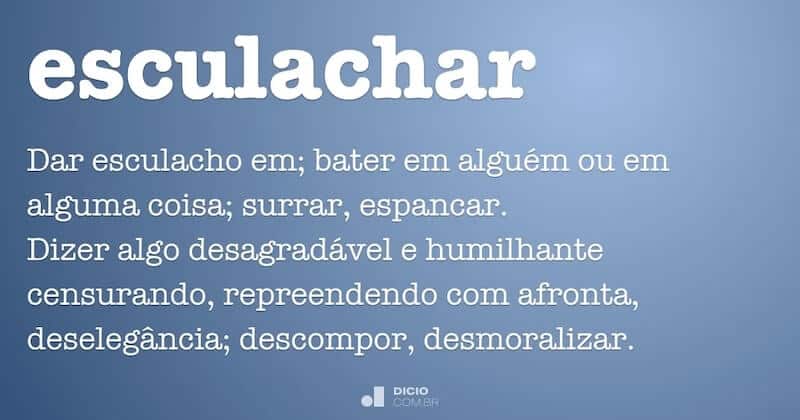
- Fiquei impressionado porque ele entrou no escritório esculachando o trabalho de todo mundo. (I was shocked because he walked into the office trashing everyone's work.)
COMIDA DE RABO
"Comida de rabo" is a massive chewing-out, the kind that leaves the person speechless, and "levar uma comida de rabo" means getting one. It's vulgar, so only use it with people you're close to and never at work. If you're curious about that heavier register, check out the most common Brazilian swear words.
- Nunca vi ninguém levar uma comida de rabo tão bruta assim, é capaz de ele ter que fazer terapia. (I've never seen anyone get chewed out that badly, he might end up needing therapy.)
The face and attitude of someone after a "scolding"
After a bronca, almost nobody in Brazil keeps a straight face: the scolding shows on their face, in their attitude and even in the sounds we make with our mouths. These expressions describe someone who's sulking, grumpy or pouting.
Here are some ways to describe how a person reacted to a scolding.
CARA DE BUNDA / CU / *
Saying someone has a "cara de bunda" (literally "butt face") is a crude way of saying they look grumpy or annoyed, a bit like calling someone a "sourpuss" in English, only a lot ruder.
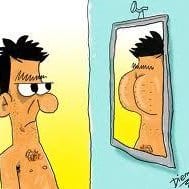
- Você vai ficar olhando pra mim com essa cara de bunda até quando? (How long are you going to keep staring at me with that sour face?)
EMBURRADO
"Emburrado" describes someone who's sulking, who goes quiet and stays in a bad mood because they didn't like something, like a kid after being scolded. The verb is "emburrar". Don't confuse it with "chateado", which is closer to upset or annoyed; I explain it in my post on how to say bored in Portuguese.
- Isso aconteceu depois do feedback negativo sobre o trabalho dele, agora só o vejo emburrado na empresa. (That happened after the negative feedback on his work; now I only see him sulking around the office.)
CARRANCUDO
"Carrancudo" describes someone frowning, with a scowl on their face. It comes from "carranca", a fierce face, and we use it both for the expression in the moment and for a person who's always serious.
- Acho que ela deveria tirar umas férias pra relaxar um pouco, tanto trabalho assim tá deixando ela com essa cara carrancuda. (I think she should take a vacation to relax a bit; all this work is leaving her with that scowl on her face.)
RANZINZA
"Ranzinza" is a grumpy person, someone who complains about everything and is almost always in a bad mood. Unlike "emburrado", which is temporary, being ranzinza is more of a personality trait, like the famous Dr. House.
- Seu pai sempre foi ranzinza assim? Até pensei que ele tava com raiva de mim. (Has your dad always been this grumpy? I even thought he was mad at me.)

Article in Portuguese: Dr. House: Veja a pessoa real que inspirou o médico ranzinza
FAZER BICO
"Fazer bico" means pouting, pushing your lips out as a silent protest when you don't like something. Someone who does it a lot is called "bicudo" or "bicuda".
- Sei que você tá indo pra reunião à força, mas pelo menos quando chegar lá não fique fazendo bico. (I know you're being dragged to the meeting, but at least don't sit there pouting when you get there.)
- Ela já tem fama de ficar bicuda quando o grupo não quer fazer o que ela propõe. (She already has a reputation for sulking when the group doesn't want to do what she suggests.)
CARA FECHADA
"Cara fechada" is a serious, closed-off face that shows displeasure or anger without saying a word. "Fechar a cara" means suddenly turning serious, which is exactly what happens when someone has just been told off.
- Tem certeza que ela não ficou com ciúme depois do que aconteceu ontem? Hoje ela tava com a cara fechada pra mim. (Are you sure she didn't get jealous after what happened yesterday? Today she was giving me a stone-faced look.)
Different ways to use the verb FECHAR in Portuguese
BUFAR
Bufar de raiva: "Bufar de raiva" means huffing and puffing, letting out a loud breath because you're angry.
- O que aconteceu? Nunca te vi bufando tanto no trabalho. (What happened? I've never seen you huffing and puffing so much at work.)
EXTRA
As a bonus, here's an expression that comes from soccer, and we use it when a criticism or a scolding hits you right where it hurts, without you seeing it coming.
LEVAR CANELADA
In a broader, casual context, "levar canelada" (literally, getting kicked in the shin) means taking an unexpected blow or criticism, a metaphorical hit, like a setback or a disapproval that hurts or catches you off guard.
- Achei que a apresentação tinha ido bem, mas no final levei uma canelada do diretor. (I thought the presentation went well, but at the end the director hit me with a low blow.)
As you can see, there are lots of ways to scold in Portuguese, from a gentle puxão de orelha to a full comida de rabo, and also to describe how people react after being told off. Take notes on everything so you can review it and put it into practice in your conversations in Portuguese.


